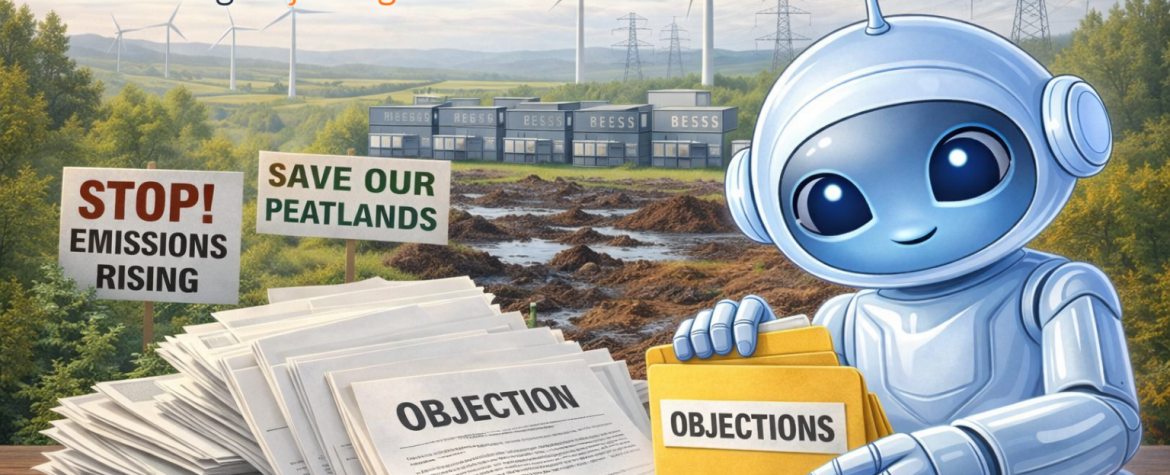
Scotland’s energy planning is at a critical crossroads. As onshore wind, offshore wind, solar farms, battery storage sites, pylons and substations expand at pace, serious questions are emerging about whether the current approach is genuinely reducing carbon emissions or quietly increasing them. This article examines how short infrastructure lifespans, repeated construction, peatland damage and grid inefficiencies are undermining Scotland’s climate advantage, while rural communities shoulder the environmental, health and economic impacts. With large scale developments facing growing public opposition, calls for a moratorium on energy planning in Scotland are intensifying until a transparent national energy strategy is published that properly accounts for true carbon costs, protects peatlands, and places public wellbeing at the centre of the energy transition.