
Why Dumfries and Galloway Must Stop More Energy Projects
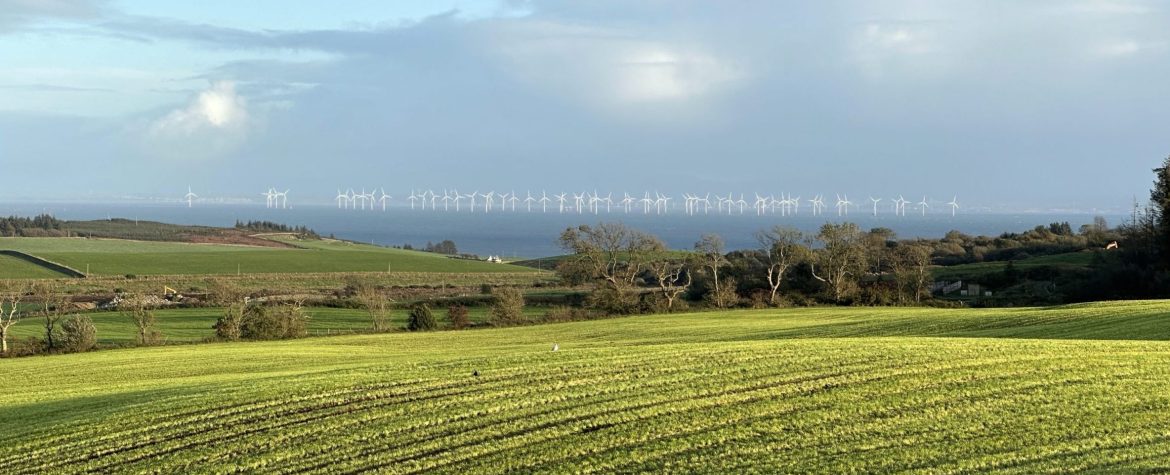
The latest release of the Electricity Ten Year Statement (ETYS) 2024 by National Grid ESO offers a revealing insight into the true function of Dumfries and Galloway within the UK energy network.
Despite the region being saturated with wind farms and increasingly targeted for solar arrays and battery energy storage systems (BESS), the electricity produced here is not powering local communities.
Instead, it is being exported to distant urban and industrial centres in England and central Scotland; demonstrating conclusively that Dumfries and Galloway is being treated as a generation zone, not a beneficiary of its own energy output.
A Region Saturated with Infrastructure
Across Dumfries and Galloway, there is an extensive concentration of operational and proposed wind farms, particularly around Sanquhar, Carsphairn, New Cumnock, Dalry, Glenluce, and Moniaive. These installations have been joined in recent years by proposals for large-scale solar developments and battery storage facilities under Sections 36 and 37 of the Electricity Act 1989.
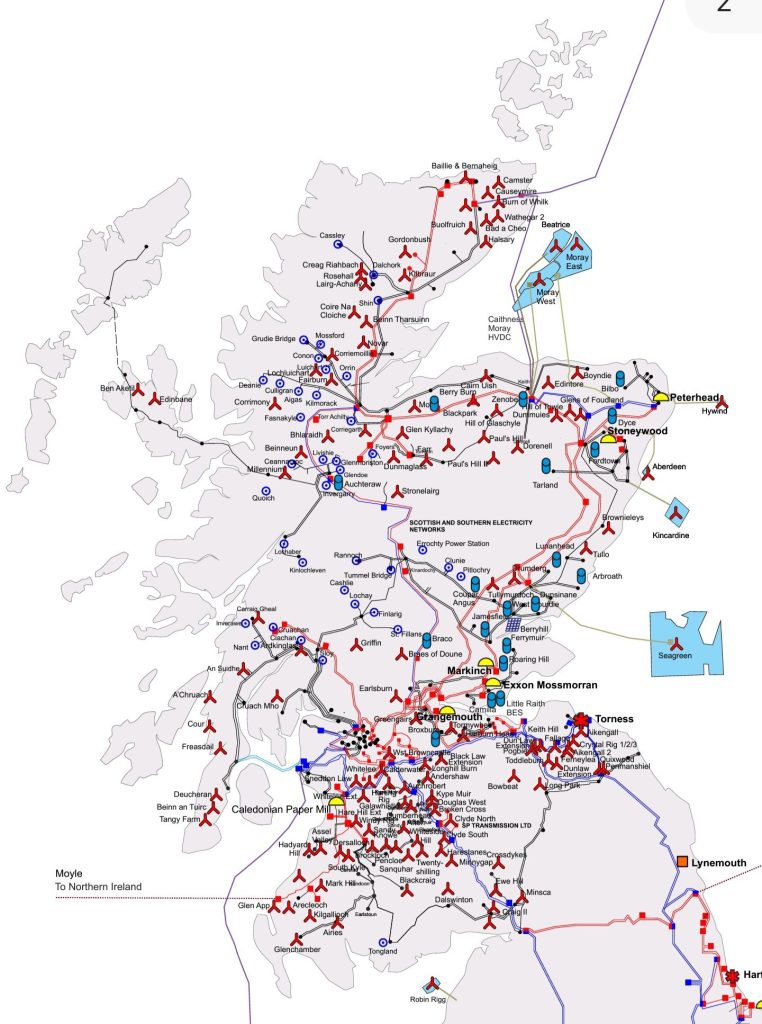
However, the 2024 ETYS geographic network map shows clearly that the region lacks major demand centres or industrial hubs that would justify this scale of generation capacity for local use.
Instead, Dumfries and Galloway serves as a collection point where electricity is gathered and transmitted out of the area via the high-voltage transmission grid.
Transmission, Not Distribution
The primary transmission routes originating in Dumfries and Galloway follow two key directions:
1. Southbound via Harker (Cumbria):
High-voltage 400kV and 275kV lines carry electricity from substations such as Glenlee, Tongland, and Chapelcross directly into England. From there, it feeds into the national grid serving North West England and beyond.
2. East and North-East via Coylton and Strathaven:
Wind generation near Barrhill, Glen App, and New Cumnock is routed towards substations in Ayrshire and then onwards into the Scottish Central Belt, supplying cities such as Glasgow and Edinburgh.
The ETYS map also confirms that there are no return loops or secondary transmission connections that would facilitate local distribution of this power. Dumfries and Galloway’s own grid infrastructure operates largely at lower voltages (132kV or below) and is insufficient to retain or distribute the high volumes of electricity produced locally.
No Local Benefit, No Justification for Expansion
This network design highlights a fundamental problem: Dumfries and Galloway is being used as a power export zone, while local residents see no corresponding benefit. Despite hosting dozens of industrial-scale wind farms and being targeted for further large infrastructure projects, the region continues to experience rural fuel poverty, grid unreliability, and a lack of local reinvestment.
There is no national energy strategy that mandates additional renewable capacity in Dumfries and Galloway specifically. Nor is there any demonstrable local electricity demand that justifies more turbines, solar parks, or battery facilities in this area.
The continuing expansion of Section 36 and 37 energy applications is therefore not a response to local need, but rather an opportunistic exploitation of a rural region with relatively weak planning resistance.
A Call for a Halt to Section 36 and 37 Developments
The facts presented in the ETYS 2024 make one point abundantly clear: Dumfries and Galloway is already fulfilling “and exceeding” any reasonable expectation of contribution to the national grid. Further developments would not address local energy demand, nor would they reduce electricity prices or improve resilience for local households.
ObjectNow calls for an immediate moratorium on new Section 36 and 37 applications in Dumfries and Galloway, pending a full review of:
- Regional grid saturation levels
- Transmission system capacity
- Local vs national electricity consumption patterns
- Environmental and social carrying capacity
Until a just and equitable planning framework is introduced — one that respects the rights and wellbeing of rural communities — it is both unnecessary and unjustifiable to continue expanding large-scale energy infrastructure in this region.

Leave A Comment